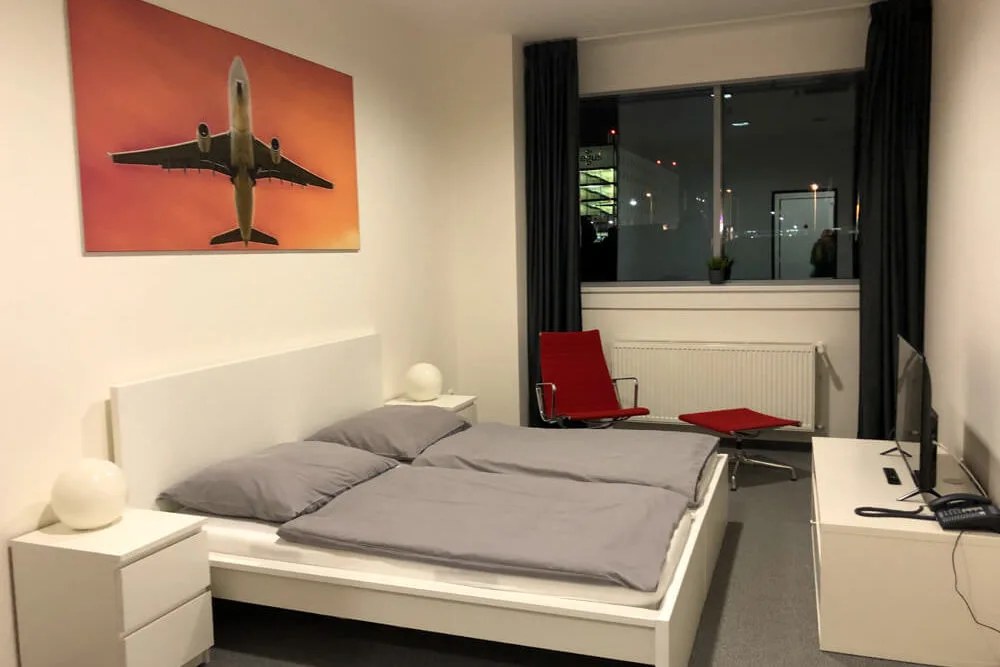
Capsule Hotels: four floors where the room is a berth
Four hotels in which the sleeping unit is a fitted berth rather than a room, in Tokyo, Singapore, Kuala Lumpur and at Prague Airport. What puts a hotel in this section is that the format was designed for a tight floor plan. Small conventional rooms and shared dormitories with beds and doors are not here.
09
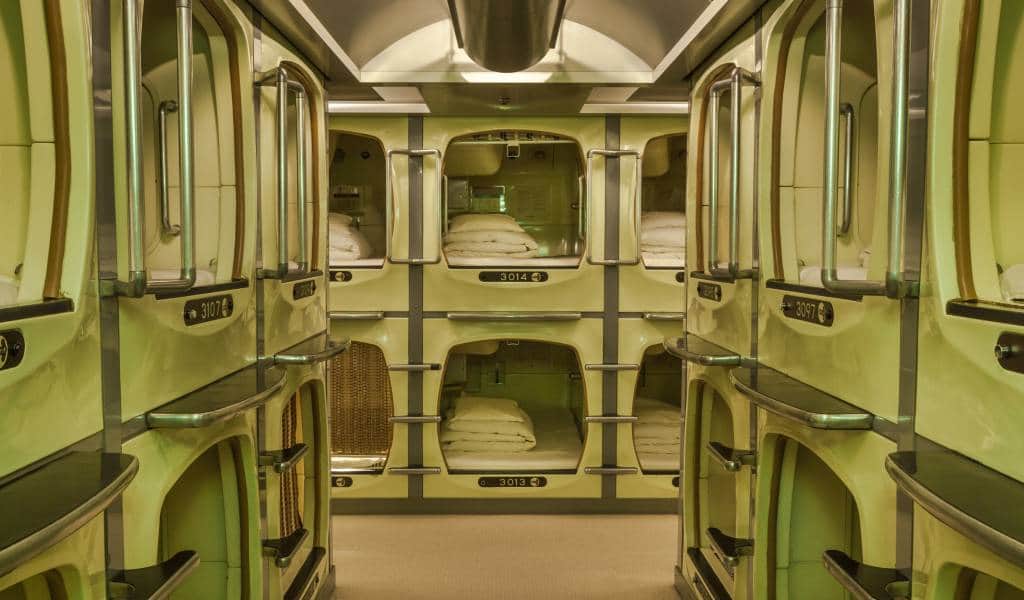
Capsule Hotel Shinjuku Kuyakusho-mae
Tokyo, Japan
A classic capsule hotel packed into the dense block behind the Shinjuku ward office
In a night
Nothing here has a door. Each capsule closes with a screen, so the night is made of the sounds of a shared floor rather than of walls. Lockers, baths and lounges sit on other levels. Outside, the block stays lit and busy long after the building has gone quiet.
In a season
Tokyo's year reaches this building indirectly, through what people carry in: wet coats in the rainy season, heavy layers in winter, almost nothing in August humidity. The capsules themselves are identical in every month. What changes is the pressure on the lockers, the drying space and the baths.
In a lifetime
The capsule format began in Japan in the 1970s and became ordinary in districts like this one, where land is expensive and floor area is counted narrowly. This hotel belongs to that working generation of buildings rather than to the later design-led wave. Shinjuku has been rebuilt around it many times over without touching the format itself.
Before the trip
Capsule floors are usually separated by gender, so confirm the arrangement before you plan the night.
Entry dated · September 2026
10
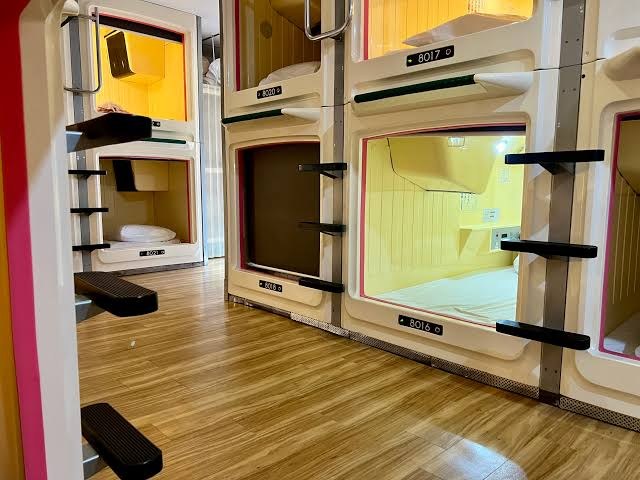
MyCUBE by Temple Street
Singapore
Capsules fitted into a Chinatown shophouse on a street named for its temple
In a night
The shophouse is narrow and deep, so the cubes run back from the street rather than across it. Ventilation and light are shared down the length of the floor. Temple Street outside empties slowly, and the building's noise arrives from the front rather than from above or behind.
In a season
Singapore's year has no cold season, only wetter and drier stretches, so the building's work is constant: keeping heat and humidity out and moving air through a deep floor plan. The street changes far more than the weather does, filling and emptying around temple occasions and market hours.
In a lifetime
Shophouses of this type were built in rows through Singapore's older districts and were later protected rather than cleared. Their interiors, however, have been reused many times over. Fitting capsules behind a conserved shophouse front is one of the newest of those uses, and it leaves the street facade doing exactly its original job.
Before the trip
Chinatown streets are narrow, so arriving on foot from the nearest station is simpler than by car.
Entry dated · September 2026
11
The Bed KLCC
Kuala Lumpur, Malaysia
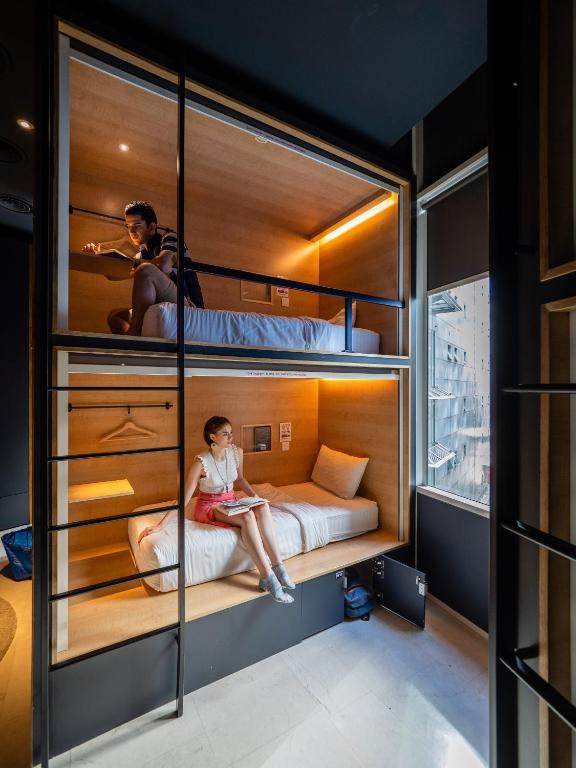
A capsule hotel inside the high-rise quarter that surrounds Kuala Lumpur City Centre
In a night
Capsules here occupy one floor of a tower, so the night sky belongs to the corridor windows rather than to the beds. Air conditioning is the constant sound. Around the building the KLCC towers stay lit, and that light reaches the shared spaces but stops well short of the cubes.
In a season
The monsoon months bring afternoon storms that empty the streets quickly and fill the lounge with people waiting them out. Heat and humidity hold steady the rest of the year. Inside, the floor runs the same way in every month, which is much of the reason the format exists at all.
In a lifetime
The KLCC district was developed on the site of a former racecourse and grew upward within a few decades. Buildings here are young, and their interiors turn over faster still. A capsule floor is one way an existing tower has been refitted, without any change to the structure that holds it or to the frontage below.
Before the trip
The district is walkable but the towers are large, so note the building name as well as the street.
Entry dated · September 2026
12
Aerorooms
Prague Airport, Czech Republic
Compact cabins built at the terminal, for nights measured against a flight rather than a city
In a night
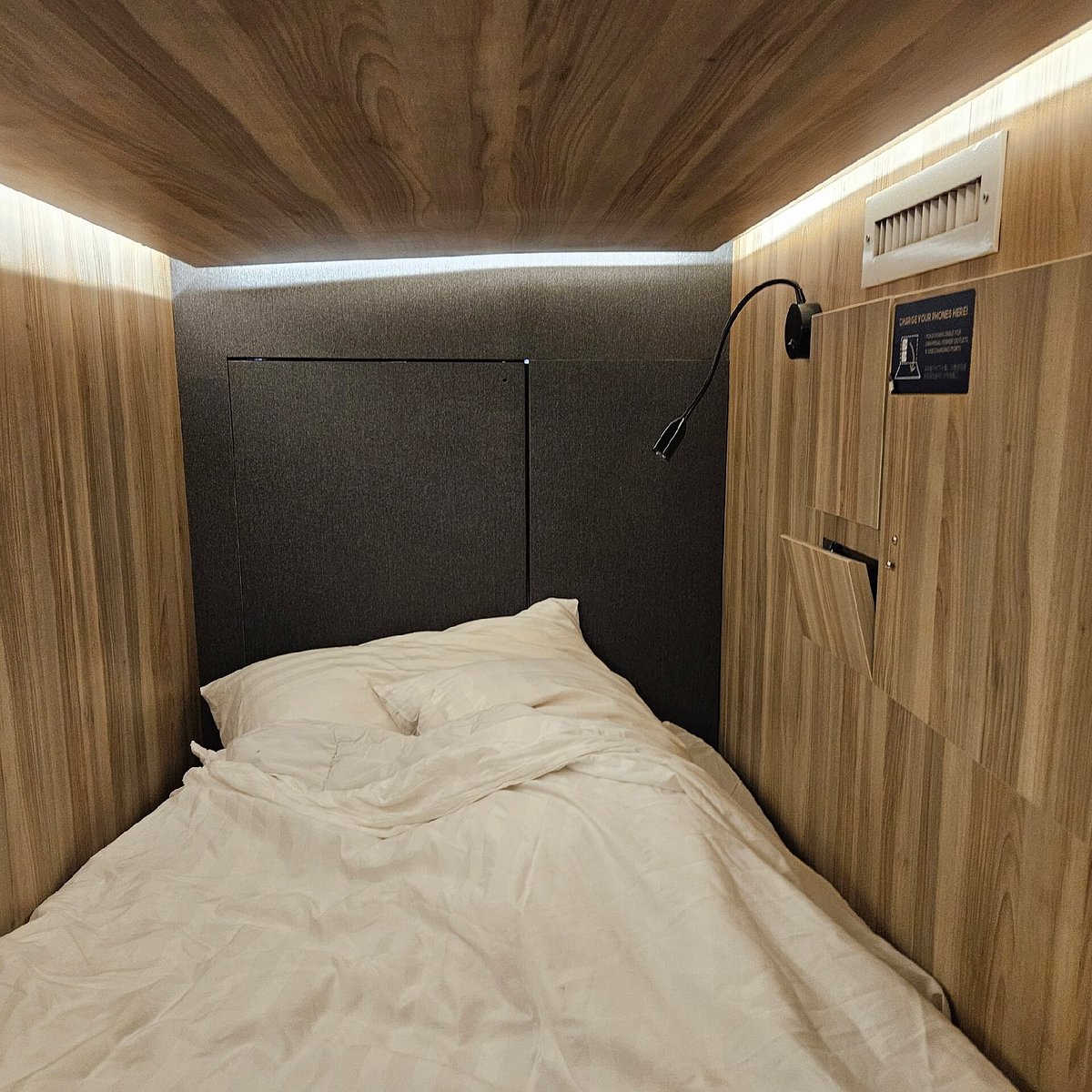
A terminal never fully darkens, so the cabins do the darkening instead. They are sealed, windowless and quiet, set back behind the noise of the concourse. Outside them the building keeps its own rhythm of cleaning, loading and the first movements of the day before dawn.
In a season
Weather changes what the airport does far more than what the cabins do. Winter brings de-icing and delay, summer brings volume, and the cabins absorb both, because they are used when a schedule breaks or begins too early. Prague itself, half an hour away, is a separate matter entirely.
In a lifetime
Prague's airport has been rebuilt and renamed as the city's traffic changed, and its terminals have grown in stages rather than at once. Accommodation attached directly to a terminal is a recent addition to that sequence. The cabins occupy airport floor area rather than a building of their own, so their history is the terminal's history.
Before the trip
Confirm which terminal the cabins sit in, and whether you reach them before or after security.
Entry dated · September 2026
Three clocks are a way of arranging what is already published about a building, not a record of anything we witnessed. No opening hours and no times appear on this site, and the month under an entry is when its sources were last opened.