Art Hotels: six buildings that were something else
Six hotels where the building, its fabric or its ground carries the interest: a brewery, a 1926 city hotel, a set of historic street fronts, a timber house on a ridge, a preserved alpine hotel and a working estate. Hotels that only hang pictures on new walls are not in this section.
13
Hotel Ottilia
Copenhagen, Denmark
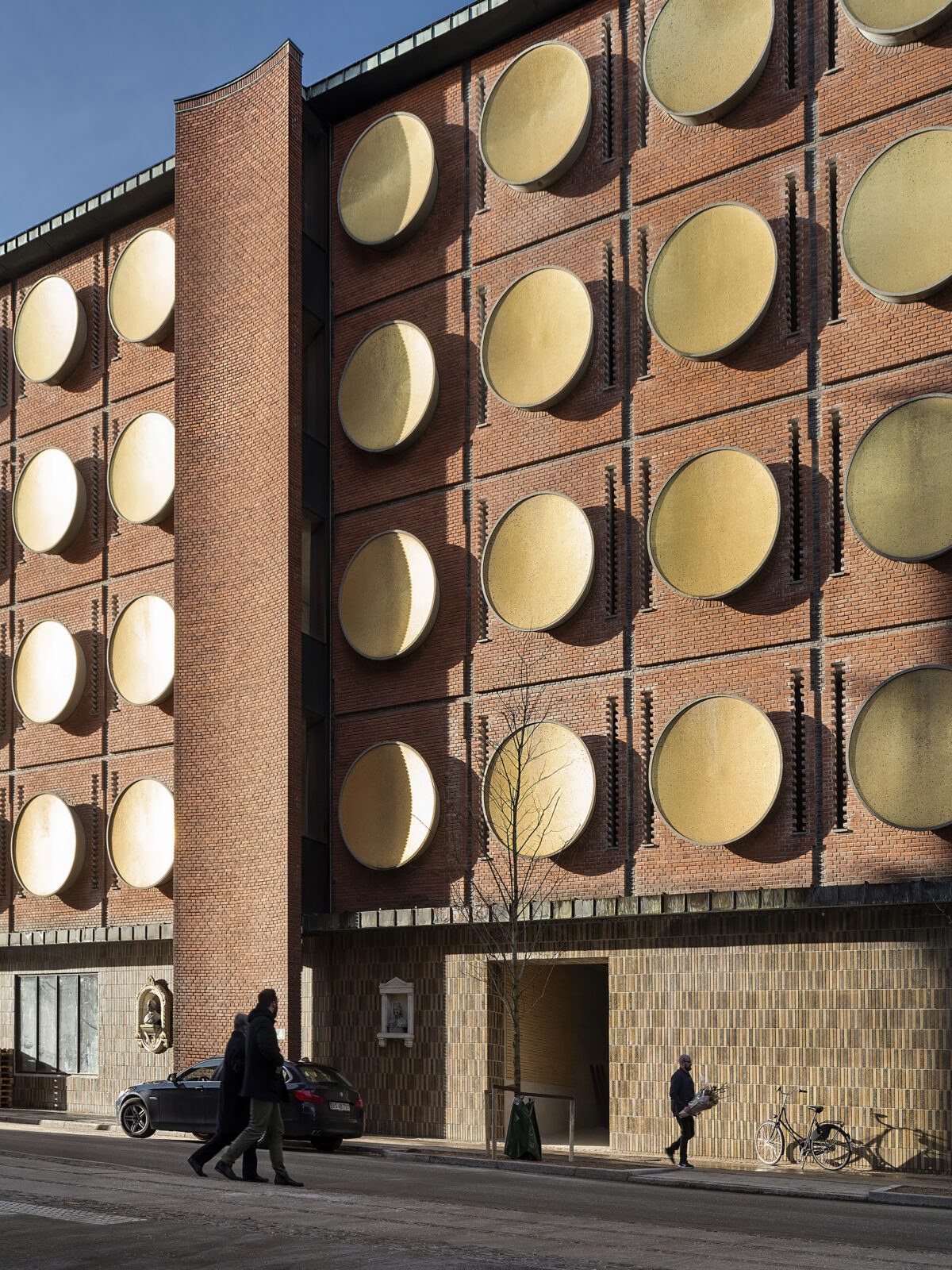
A hotel inside nineteenth-century Carlsberg brewery buildings, with brick and openings left in place
In a night
Brewery walls are thick, and at night that thickness is the thing you notice. Sound from the district stops at the brick. The old industrial openings are large, so lit rooms show up from the street as deep rectangles. The former brewery grounds around them stay dark and open.
In a season
The Carlsberg district is still being rebuilt around the hotel, and that work follows the year: courtyards in use through summer, empty through winter. Brick holds temperature slowly, warming late in spring and staying cool into early summer. Light through the tall openings changes character completely between the seasons.
In a lifetime
The buildings were raised in the nineteenth century for the Carlsberg brewery and worked as industrial premises for over a century. When brewing moved away, the site was left with heavy structures and no use. The conversion kept the brick walls and the industrial openings, so the hotel reads as a reused brewery, not a new building.
Before the trip
The district is still under construction in places, so check the walking route rather than assuming one.
Entry dated · August 2026
14
Hotel Figueroa
Los Angeles, United States
A 1926 downtown hotel first built to give women travelling alone a place to stay
In a night
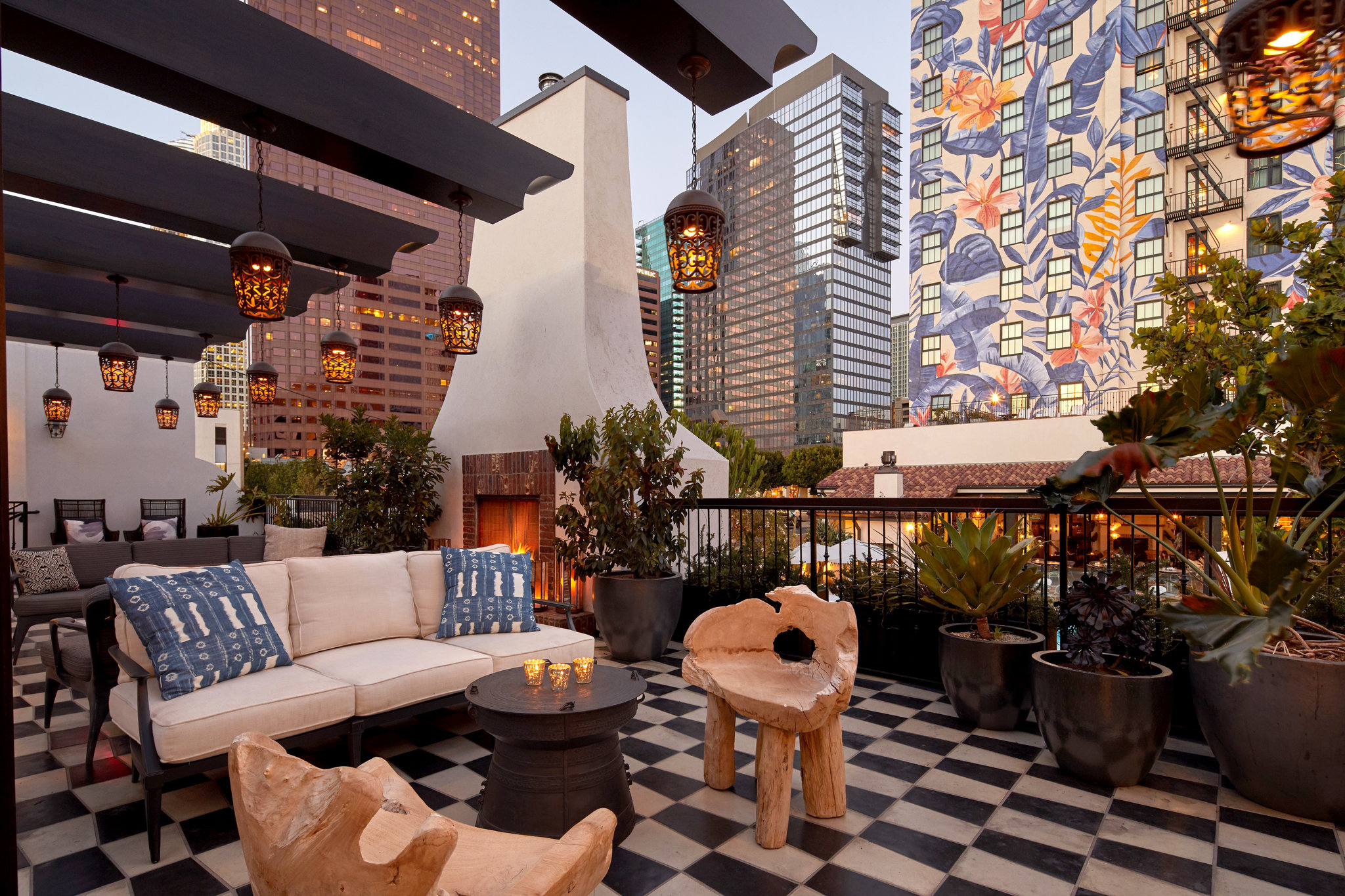
The timber lobby ceiling is low-lit and dominates the ground floor after dark. Beyond it the courtyard pool holds the only open sky on the property, with downtown towers standing above the wall. The street side keeps the hard surfaces and reflections of a city block.
In a season
Los Angeles gives the courtyard most of the year outdoors, so the pool deck is the part of the hotel that changes least. What shifts is downtown around it, as events nearby fill and empty the streets in bursts. Winter here is a matter of shorter evenings rather than cold.
In a lifetime
The hotel opened in 1926, built by the YWCA as accommodation for women travelling on their own, which was unusual for a downtown hotel of that period. It has since passed through other owners and several renovations. The 1926 structure, the timber lobby ceiling and the courtyard have stayed the fixed points across all of them.
Before the trip
Downtown blocks differ street by street, so look at the immediate approach before choosing how to arrive.
Entry dated · August 2026
15
Hotel Kinsley
Kingston, United States
One hotel spread across several historic buildings in Kingston, among them a former bank
In a night
There is no single lit facade, because the hotel occupies more than one building on more than one street. Guests cross public pavement between them. The former bank keeps its heavy stone front, and its banking-hall ground floor is the loudest room on the property after dark.
In a season
Kingston's year is legible from the street: leaf cover in summer, bare frontages in winter, and a Hudson Valley shoulder season that fills the town with weekend traffic. Because the hotel is dispersed, the season is something guests walk through on the way to dinner rather than watch from a window.
In a lifetime
Kingston's centre holds nineteenth-century commercial buildings, among them a bank built to look permanent. Many of them stood underused as the town's economy changed through the twentieth century. The hotel occupies several at once, so its history belongs to a street rather than to one address, and the conversion left the individual fronts recognisably separate.
Before the trip
Rooms sit in different buildings, so check which address yours is at before you arrive.
Entry dated · August 2026
16
Vigilius Mountain Resort
Lana, Italy
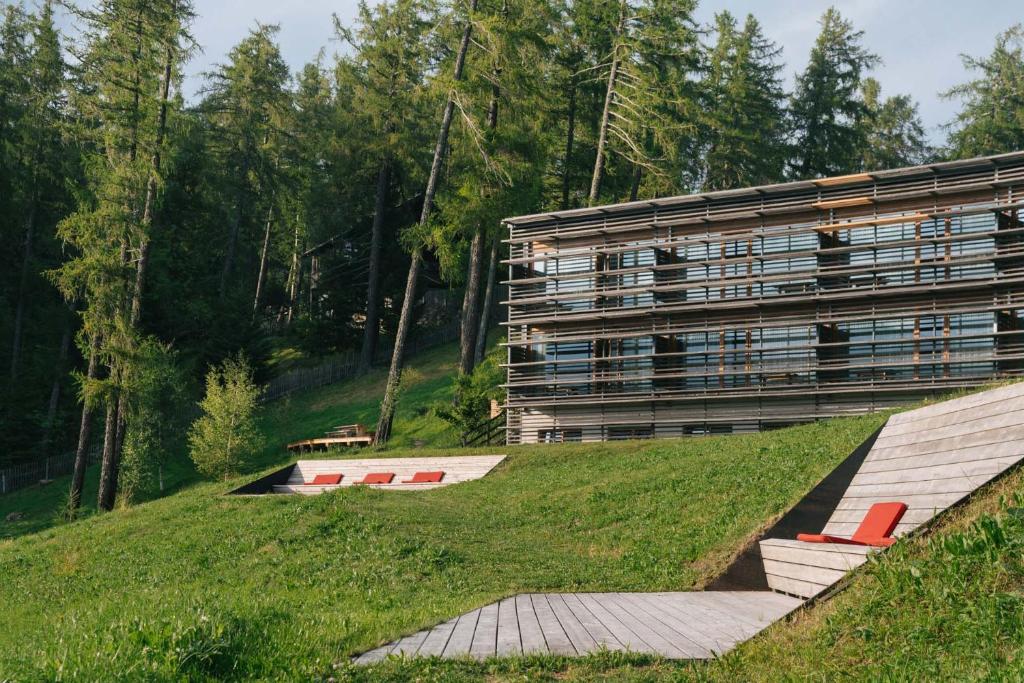
A larch-clad mountain hotel reached only by cable car, with no road to the door
In a night
With no road, nothing arrives after the last cable car, and the mountain goes quiet in a way a valley hotel cannot. The larch cladding gives off almost no reflection. Below, the lights of Lana and the valley floor mark out the distance you have travelled upward.
In a season
Winter puts snow on the ridge and skiers on the slopes, and summer turns the same ground into pasture and walking routes. The larch outside weathers grey with the years and the wet months. Cloud settles below the hotel often enough that the valley disappears for a day at a time.
In a lifetime
The mountain above Lana has been reached by cable car since long before the current hotel, and it carried an earlier guest house. The present building replaced that arrangement with a low, long timber structure clad in local larch. The absence of a road is the oldest condition here and the one that shaped everything built since.
Before the trip
Everything you bring travels by cable car, so pack for the last part of the journey on foot.
Entry dated · August 2026
17
Hotel Bellevue des Alpes
Kleine Scheidegg, Switzerland
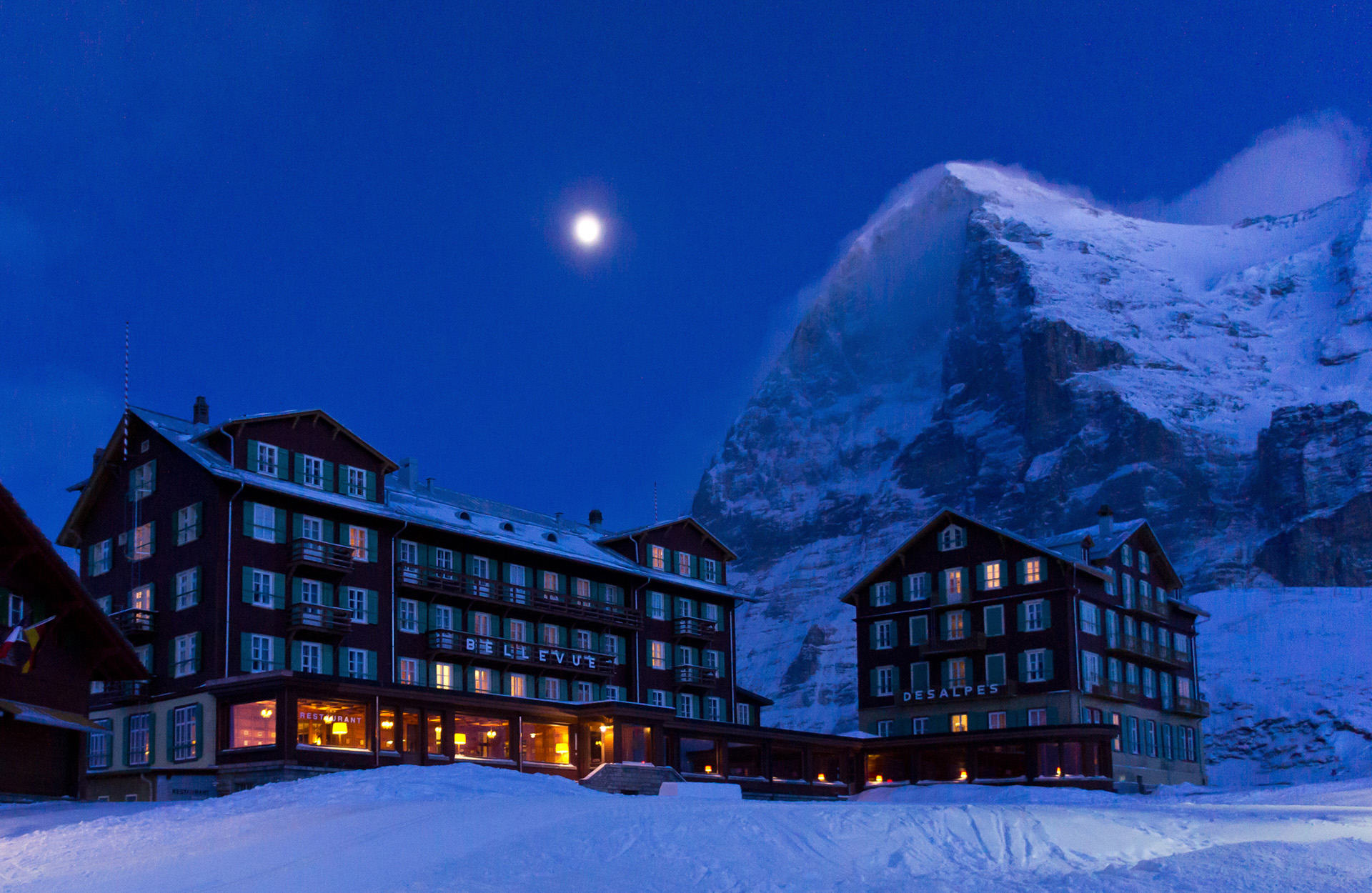
A mid-nineteenth-century mountain hotel below the Eiger, reached by railway rather than by road
In a night
At Kleine Scheidegg the trains stop for the night and the pass empties out. The Eiger north face stands directly above and, in clear weather, remains visible as a black absence of stars. Inside, the rooms are kept in their older form, with wood, painted doors and no modern brightness.
In a season
The pass is a winter ski junction and a summer walking one, with two quiet gaps between them when the weather is neither. Snow can close the ground around the hotel while the railway keeps running. The mountain face above changes appearance with every shift in cloud, wind and temperature.
In a lifetime
The hotel dates from the middle of the nineteenth century, when mountain railways first brought visitors up to Kleine Scheidegg. It stood through the era when the Eiger north face drew climbers and spectators to this exact spot. Rather than modernise the interiors, the owners have deliberately kept them, so the building still reads as its own period.
Before the trip
The hotel is reached by mountain railway, so plan the last connection and not just the arrival day.
Entry dated · August 2026
18
The Newt in Somerset
Bruton, England
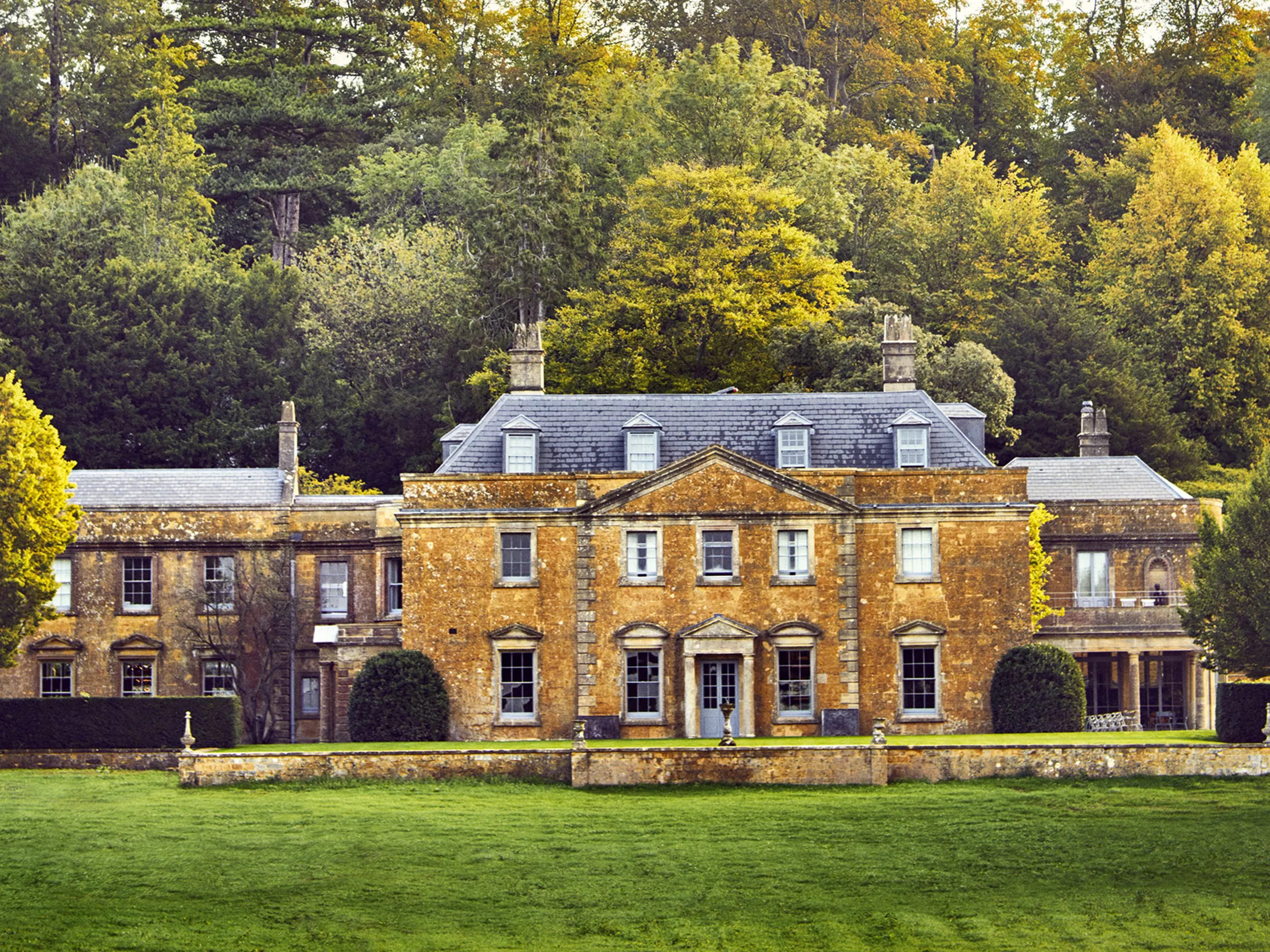
A Somerset country estate turned hotel, with working gardens and a farm around it
In a night
The gardens close and the estate becomes dark ground, with the house lit and the walled enclosures unlit beside it. Farm buildings sit further out again. Sound at night is agricultural rather than architectural: stock, wind moving through planting, and very little traffic on the lanes.
In a season
The estate runs on the growing year. Orchards, kitchen gardens and cider production set what is happening on the ground in any given month, and the planting is legible from the house. Winter strips the formal gardens back to their structure, which is when their layout is easiest to read.
In a lifetime
The estate is an old Somerset country property, with a house, walled gardens and farmland that were worked long before any hotel use was considered. The conversion kept the agricultural function rather than replacing it, so gardens and farm still operate. The hotel was inserted into that existing arrangement, which is why the grounds are not landscaping.
Before the trip
The estate is large and rural, so allow time for walking between house, gardens and farm.
Entry dated · August 2026
Three clocks are a way of arranging what is already published about a building, not a record of anything we witnessed. No opening hours and no times appear on this site, and the month under an entry is when its sources were last opened.